Table of Contents
ToggleA swaddling and soothing guide can transform those stressful first weeks with a newborn into something more manageable. New parents often feel overwhelmed when their baby won’t stop crying, but the right techniques make a real difference.
Swaddling mimics the snug environment of the womb. It helps babies feel secure and sleep longer. But there’s more to calming a fussy infant than wrapping them in a blanket. This guide covers safe swaddling methods, effective soothing strategies, and clear signs that tell parents when it’s time to transition away from the swaddle.
Key Takeaways
- Swaddling mimics the womb environment, reducing the startle reflex and helping newborns sleep longer and cry less.
- Safe swaddling requires loose hips, thin breathable fabric, and always placing baby on their back to sleep.
- The 5 S’s method—swaddling, side/stomach holding, shushing, swinging, and sucking—provides a powerful soothing toolkit for fussy babies.
- White noise, skin-to-skin contact, and warm baths are effective soothing strategies to use alongside swaddling.
- Stop swaddling immediately when your baby shows signs of rolling over, typically around 2-4 months old.
- Transition gradually by freeing one arm first, then using sleep sacks while maintaining other soothing routines.
Why Swaddling Works for Newborns
Swaddling works because newborns aren’t ready for the outside world, at least not fully. During the first three months, babies experience what pediatricians call the “fourth trimester.” Their nervous systems are still developing, and sudden movements can startle them awake.
The Moro reflex (that jerky arm-flailing motion) disrupts sleep constantly. A proper swaddle keeps arms contained, which reduces these startle responses and helps babies stay asleep longer.
Swaddling also provides consistent pressure against a baby’s body. This pressure activates the calming reflex, a neurological response that decreases fussiness. Research published in Pediatrics found that swaddled infants sleep more soundly and cry less than unswaddled babies.
Here’s what swaddling does for newborns:
- Reduces startle reflex – Contained arms mean fewer sudden wake-ups
- Promotes longer sleep – Babies feel secure and settle faster
- Regulates body temperature – A light swaddle blanket maintains warmth without overheating
- Decreases crying – The womb-like sensation triggers natural calming responses
Some parents worry swaddling will make their baby dependent on it. That’s not how it works. Swaddling is a temporary tool for the newborn stage. Most babies outgrow the need within 2-4 months.
How to Swaddle Your Baby Safely
Safe swaddling requires the right technique. Done incorrectly, it can pose risks to a baby’s hips or breathing. Done correctly, it’s one of the most effective soothing tools available.
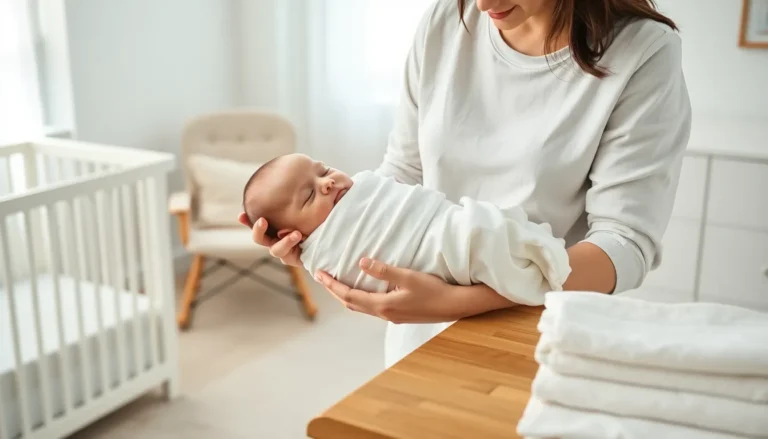
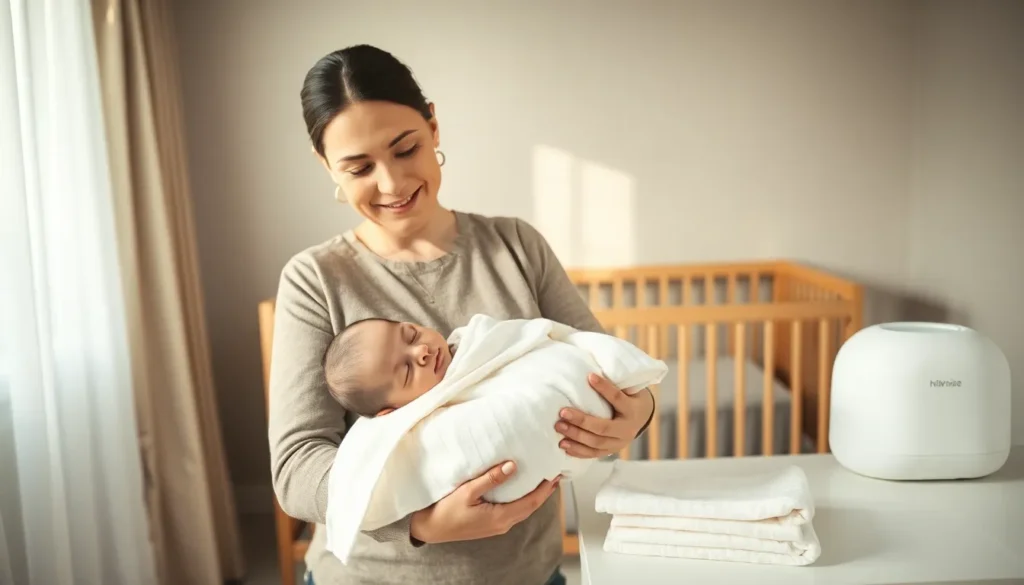
Step-by-Step Swaddling Method
- Lay the blanket flat – Place a thin, breathable blanket in a diamond shape. Fold the top corner down about 6 inches.
- Position the baby – Place your baby face-up with their neck at the fold.
- Secure the first side – Hold your baby’s right arm gently at their side. Pull the left corner of the blanket across their body and tuck it under their back.
- Fold the bottom up – Bring the bottom corner up over your baby’s feet, leaving room for leg movement.
- Complete the wrap – Pull the remaining corner across your baby and tuck it securely.
Critical Safety Guidelines
The swaddling and soothing guide wouldn’t be complete without these safety rules:
- Keep hips loose – Babies need space to bend their legs upward and outward. Tight swaddling around the hips can cause hip dysplasia.
- Don’t cover the face – The blanket should never reach above the shoulders.
- Use thin fabric – Muslin or cotton prevents overheating. Skip fleece or thick blankets.
- Always place baby on their back – Swaddled babies should never sleep on their stomach or side.
- Check for tightness – You should fit two fingers between the blanket and your baby’s chest.
Swaddle blankets with Velcro or zippers simplify the process. They’re harder to escape and maintain consistent snugness.
Effective Soothing Techniques Beyond Swaddling
Swaddling alone won’t calm every baby. Parents need multiple soothing strategies in their toolkit.
The 5 S’s Method
Pediatrician Dr. Harvey Karp developed this approach, and it works remarkably well:
- Swaddling – The foundation of newborn soothing
- Side/Stomach position – Hold your swaddled baby on their side or stomach (only while awake and supervised)
- Shushing – Make a loud “shhhh” sound near your baby’s ear. It mimics blood flow sounds from the womb.
- Swinging – Gentle, rhythmic motion calms the nervous system. Small, quick movements work better than slow rocking.
- Sucking – Offer a pacifier or let your baby nurse for comfort
Combining two or three techniques at once produces stronger results than using them individually.
Additional Soothing Strategies
White noise machines replicate the constant whooshing sounds babies heard in utero. Keep the volume at 50-60 decibels, roughly the level of a running shower.
Skin-to-skin contact regulates a newborn’s heart rate, breathing, and temperature. It also releases oxytocin in both parent and baby.
Warm baths relax tense muscles. Some babies respond well to bath time before bed as part of a soothing routine.
Gentle bouncing on an exercise ball gives parents’ arms a break while providing rhythmic motion. Many exhausted parents swear by this method.
Every baby responds differently. What works for one infant might not work for another. Parents should experiment with different soothing combinations.
When to Stop Swaddling Your Baby
Swaddling has an expiration date. Knowing when to stop protects your baby’s safety and supports their development.
Signs It’s Time to Transition
Rolling over – This is the biggest indicator. Once a baby can roll from back to stomach, swaddling becomes dangerous. A swaddled baby who rolls face-down cannot push themselves up. The American Academy of Pediatrics recommends stopping swaddling at the first sign of rolling, which typically happens around 2-4 months.
Breaking free consistently – If your baby escapes the swaddle every night, they’re telling you something. Loose blankets in the crib create suffocation risks.
Resisting the swaddle – Some babies fight the wrap, crying more when swaddled than when free. That’s a clear signal to stop.
Reaching developmental milestones – Babies need their arms free to develop motor skills. Extended swaddling can delay this progress.
How to Transition Away from Swaddling
Cold turkey rarely works well. Instead, try these gradual approaches:
- One arm out – Swaddle with one arm free for several nights, then release both arms
- Transition products – Sleep sacks with arm holes provide similar security without restriction
- Maintain other soothing methods – Keep white noise, pacifiers, and bedtime routines consistent while removing the swaddle
The transition period usually lasts 1-2 weeks. Expect some sleep disruption, but babies adapt faster than parents anticipate.